
New York, March 2025
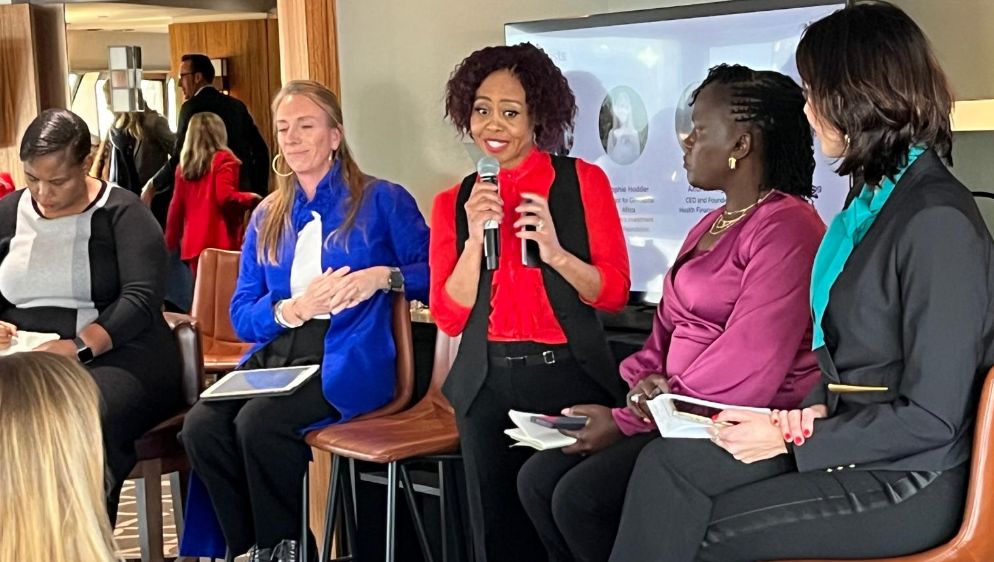
Tiko hosted a successful side event at the 69th session of the UN Commission on the Status of Women (CSW69) in New York. The event, titled “Girls as unstoppable forces of change – Investment case for girls’ health and wellbeing care in Sub-Saharan Africa”, focused on the compelling need to tackle the triple threat of unintended pregnancy, HIV and sexual and gender-based violence.
Across sub-Saharan Africa, millions of adolescent girls are forced to navigate a reality where their health, safety, and future are constantly at risk. One in four girls becomes pregnant before 18, often forced out of school with little hope of returning. Nearly half of all pregnancies are unintended, with a girl or woman dying every two minutes from preventable pregnancy-related causes. Every three minutes, a young woman is newly infected with HIV, girls account for 63% of new global infections. One in three girls experiences sexual or gender-based violence, half before the age of 15 and most never receive care or justice.
Investing in the health and wellbeing of girls is a strategic choice for the future. A healthy, educated girl becomes a leader, innovator, and drives the economy.
The investment case for girls’ health and wellbeing is urgent in an era of declining traditional funding and rising anti-rights movements. The cost of inaction is staggering but the return on investment in girls is undeniable. The event focused on integrated approaches, innovative funding models and scaling efforts that can accelerate the response to these interconnected challenges for girls where and how they need it most.
The fireside panel at Tiko’s event featured Tiko Board member and CEO of the Soul City Institute, Phinah Kodisang, who covered the impact of across the board US funding cuts for South Africa. Kodisang highlighted the need for a swift response from government and organisations to focus their efforts on sustainable, innovative and long term solutions. South Africa currently has the largest population globally of people living with HIV at 8.5 million with young women disproportionately affected. The first panel of experts spoke to why girls empowerment programmes must take a long view, investing in interventions that take an ecosystem approach.
Sophie Hodder, Senior Director of Girl Capital at the Children’s Investment Fund Foundation (CIFF) whose focus is empowering African girls by averting child marriage, delaying first pregnancy, and boosting female labour force participation, made a powerful case for “girl capital” that unlocks a cascade of positive outcomes, making it a crucial focus for development. By addressing the interconnected spectrum of health, education, and livelihoods through an ecosystem approach, we can create lasting, life-changing impact. Andrea Feigl, CEO and Founder of the Health Finance Institute spoke to her work on Women’s Health with the World Economic Forum. and identified that blended finance models can be effective when the return on investment is focused on the right kind of impact with data driven approaches forming the foundation of effective impact.
Speaking on the panel, Serah Malaba, Tiko’s Chief Impact Officer said:
“The statistics are stark. They are consequences of systems that fail girls at every stage of their lives. This is an injustice and a crisis made worse by underinvestment. We know what works, yet the world continues to underfund solutions for girls. Girls’ needs are multifaceted. When we think about girls, the three threats to their lives are unintended pregnancy, HIV and SGBV. These are intertwined and fail girls if not addressed concurrently. So many resources and interventions don’t adequately put the girl at the centre or understand where it is breaking for her and where she is not being supported. At Tiko, our core is integration, and our promise is to focus on the triple threat. When girls come into our ecosystem, they get counselling and access to contraceptives, they know their HIV status and can access ART and PrEP, and are screened for SGBV support services. Girls can immediately access comprehensive services including mental, health, vocational and education services that support them on the pathway to receive other social protection they may require. Our ecosystem approach is the only way to tackle this – the journey must not fail the girl. “
The second panel focused on how different partnerships can turbocharge girl centric intervention to where girls need it most.
Lisa Kurbiel, Head of Secretariat for the UN Joint SDG Fund joined the call for accelerated change for girls. The Joint SDG Fund pioneered, together with key partners such as the UNFPA, SDG Partnership Platform Kenya, UNFPA, UNAIDS, WHO, Children’s Investment Fund Foundation (CIFF) and Bridges Outcomes Partnerships the world’s first Adolescent Sexual Health Development Impact Bond (DIB). The DIB, implemented by Tiko, is aimed at addressing two critical challenges facing youth: teenage pregnancy and HIV/AIDS. To date, the programme has outperformed across all metrics meaning double the impact at the same cost.
Dr Oby Ezekwesili, Chairperson, The SPPG and founder at Human Capital Africa one of Africa’s fearless advocates for skill building and education, focused on the need to urgently address education and livelihoods as a priority to drive better outcomes for youth. Commenting on integration, Dr Ezekwesili said, “When we empower girls—ensuring their access to education, healthcare, and opportunities—we are laying the foundation for stronger families, healthier communities, and more prosperous nations. The ripple effects of investing in girls are undeniable: they uplift entire generations, break cycles of poverty, and drive sustainable growth.“
Ian McFarlane, Director Division for External Relations at UNFPA gave the audience insight into how international organisations better balance global oversight with empowering local governments to lead and manage their own health systems. Given the current backdrop of declining funding budgets, UNFPA provided insight into innovative finance models that not only fill immediate gaps but also build long-term capacity and self- sufficiency in partner countries.
We know that the future looks uncertain from the immediate political shifts to the radical shifts of development finance architecture as we know it. It’s evident that this is an opportunity to do things differently and effectively to ensure there is no disproportionate effect on girls and young women – but we have to commit to strategic investments to power girls’ futures now.