
by Serah Joy Malaba, Co CEO, Tiko
When I think about the daily challenges that adolescent girls and young women face in sub-Saharan Africa, it is hard to ignore the systemic issues that continue to fail girls from the start. The ‘Triple Threat’ of teen pregnancy, HIV and sexual and gender-based violence (SGBV) puts many lives at risk but these do not exist in a vacuum. Limited access to healthcare, and education, financial difficulty and poor nutrition makes it difficult for a young person to get ahead and these pressures often result in related mental health challenges. The demand is clear as we increasingly see girls come to us with multi-faceted needs. Where 1 in 4 girls becomes pregnant before the age of 18, with a young woman newly infected with HIV every 3 minutes and 1 in 3 girls experiencing SGBV, for many girls, these circumstances overlap. Because of this, many girls leave school, 37 million adolescents (ages 10-19) live with a mental health disorder, with anxiety and depression making up almost 50% of cases making it an uphill struggle to find employment and build their skillset. On a daily basis, we see girls coming to the Tiko ecosystem already pregnant, or having had a child and experiencing SGBV, with a heightened risk of contracting HIV and little hope for their future. Addressing only one of these challenges does not solve the problem. While numerous programmes are in place to address these risks, they frequently focus on individual issues in isolation, providing fragmented support that arrives too late or fails to adapt to the shifting realities of young people’s lives. To add to these statistics, the recent global funding cuts are amplifying these challenges and making the need more urgent.
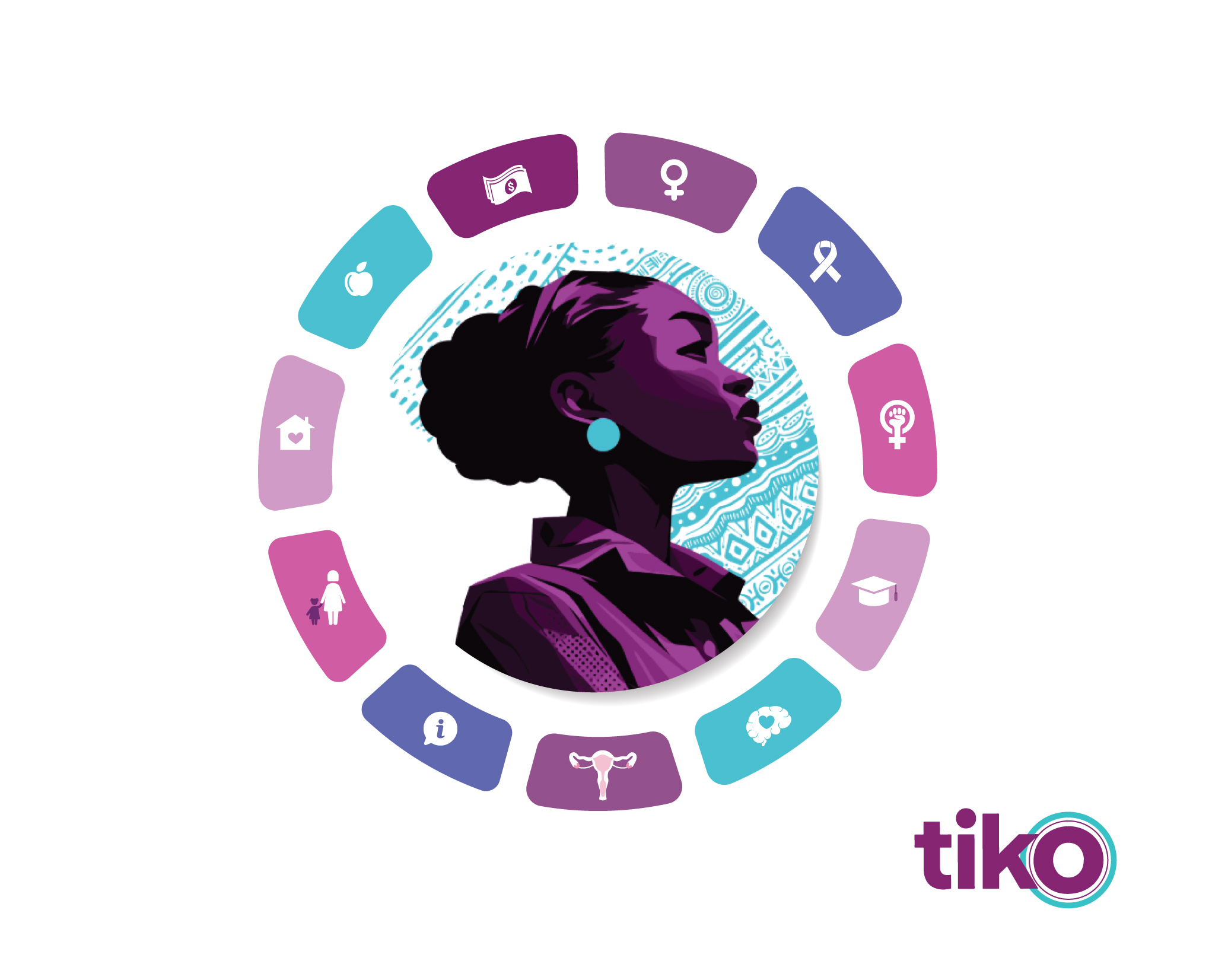
The data should be a resounding call that we need to serve young people to match their reality. The most powerful approach we can take is to adapt programming that addresses these challenges together. With girls’ voices at the centre, our work is now to connect the dots between health, education, livelihoods, and safety, so that we don’t miss the mark in terms of real, long-term impact. This approach ensures that girls receive coordinated care, with different providers and ecosystems working collaboratively to meet diverse needs. For example, integrating sexual and reproductive health with mental health services not only enhances access but also addresses intersecting challenges, fostering resilience and improved health and wellbeing outcomes for underserved girls. By listening to their needs, we must continually adapt to break down barriers and ensure girls remain connected to supportive communities of care.
We are seeing the power of integration in action in Siaya and Machakos in Kenya, where girls especially, are faced with a greater risk of early marriage, HIV, teenage pregnancy and disruption in their education and unemployment. With a high number of teen pregnancies in certain sub-counties, our approach was guided by girls’ needs to have access to antenatal care groups ensuring they have a healthy pregnancy and delivery. Many cannot afford childcare which then impacts their ability to return to school or develop skills in order to earn a livelihood. We now integrate our services to include group antenatal care, interpersonal group therapy, menstrual health, livelihood training and financial empowerment. These solutions are co-created using community research, stakeholder workshops and tested before scale-up begins. With teenage pregnancy often an entry point for a girl to connect with Tiko, we introduced group antenatal care across 7 private and 5 public facilities in Siaya and Machakos. Partnering with 55 providers, we delivered antenatal services to 717 girls. By layering a livelihoods programme onto this, it offers a new pathway for girls to thrive and achieve their goals. The livelihoods programme is embedded in the surrounding context. The micro credential training is a labour-market demand-led, short-term and outcome-based training programme. It takes into account that a girl with a child or children may not have childcare, transport or the time or finances required. Tiko works with established training institutions to place trainees into internships, job opportunities, and business mentorship and support. We now have girls that have truly grown up with Tiko as their central portal to connect them to what they need.
Building these solutions always begins with the girl at the centre. From feedback loops and direct ratings to in-depth interviews, we ensure every service is shaped by her voice. Central to this is our partnership across both the public and private sector. We are able to see how the ecosystem is performing in real time, and as we scale we are able to form partnerships within existing systems that can easily be added onto the platform. The ability to use the Tiko platform to integrate services and incentivise all the ecosystem partners shows us how the overall system is strengthened and where we need to address gaps. I am encouraged by the significant impact when we co-create solutions to address the reality in which young people live. Combining the voices of girls, working across public and private sectors and using cutting edge technology is helping us to scale our integrated services and find ways to be responsive to changing realities so that the care and services that girls receive is relevant and impactful.
Moreover, integration leverages resources more effectively, reducing redundancies and maximising the impact of investments. It enables care innovations that can be taken from pilot to scale to tackle root causes and barriers, streamline service delivery and improve accessibility. By adopting a unified approach, we work across our ecosystems to align priorities, pool expertise, and create synergies that drive systemic change. By 2030, we will reach 5 million girls annually, leveraging off our model, data and results, that proves integrated, girl-centric health and wellbeing approaches serve their needs, and provide greater opportunities for girls to be safe, stay in school, be financially independent, supporting them to shape their futures. We are moving away from girls just being beneficiaries to where they can play an active part in the support that they need. By providing comprehensive co-designed support that touches on all aspects of a young woman’s life—health, education, economic opportunity, and mental well-being—we meet girls where they are, so that they can become unstoppable forces of change.