
In Ethiopia, young people make up a significant portion of the population. Nearly 70% are under the age of 30. But with youth comes unique challenges: high rates of teenage pregnancy, limited access to sexual and reproductive health services, and deep-rooted stigma around young people seeking contraception. While national efforts have expanded access to healthcare, urban and peri-urban communities like Gulelle in Addis Ababa continue to struggle with gaps that leave many young girls vulnerable to unintended pregnancies and social exclusion.
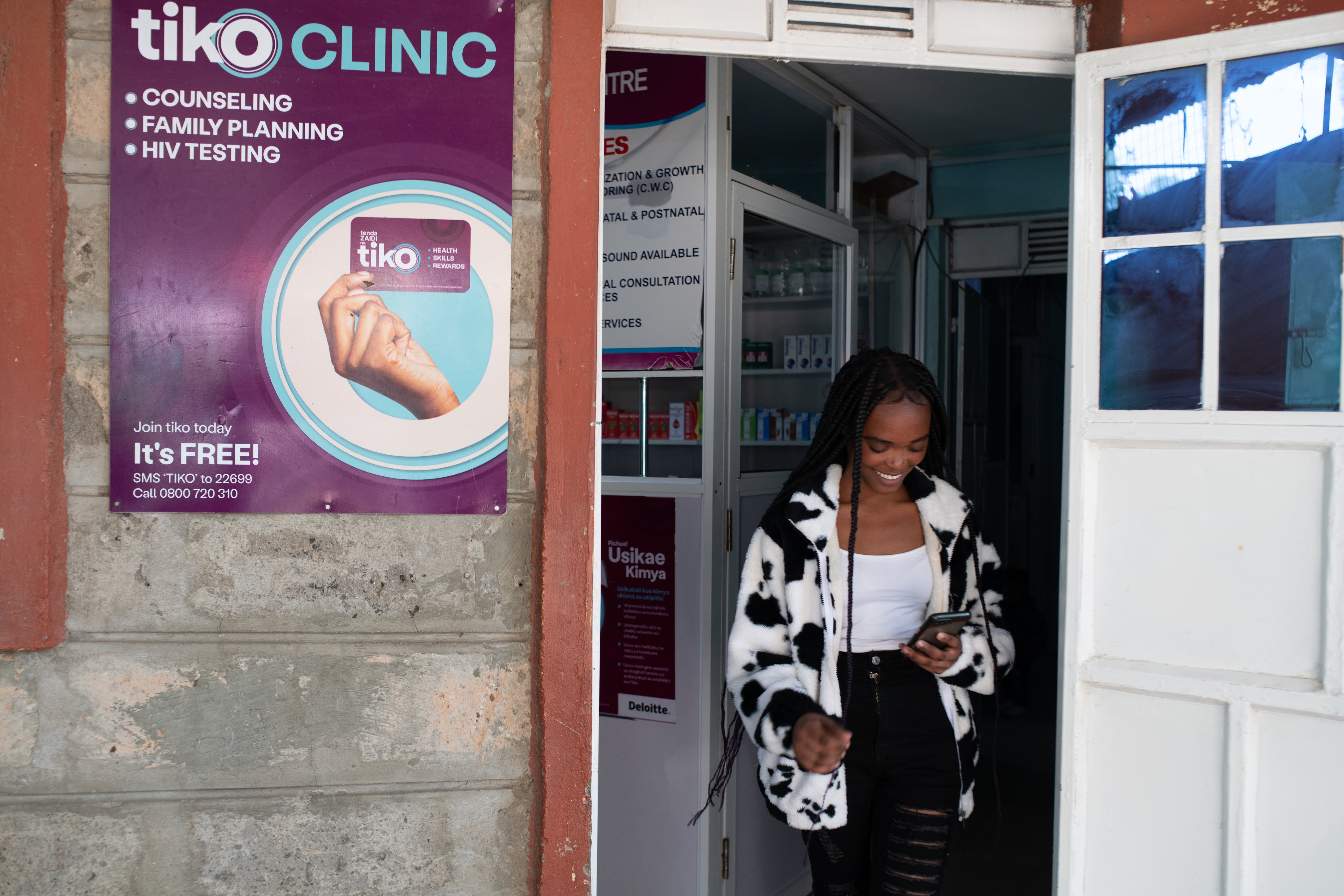
At the Sabriyout Clinic in Gulelle sub-city, Dr. Biniyam Fentie has spent the last few years working to close these gaps. The clinic, in partnership with Tiko, is making critical reproductive health services more accessible and changing the trajectory of many young lives.
“Our clinic mainly serves young people referred by Tiko mobilisers,” explains Dr. Biniyam. “When they arrive, we counsel them on the available services, offer free contraceptive options, and let them know they can earn Tiko Miles they can redeem at nearby shops. It motivates them to return and stay healthy.”
Dr. Biniyam sees daily, the deep-rooted issues facing the community. Teenage pregnancies are a major concern, even though contraceptive options are available.
“Girls often rely on emergency contraception, sometimes taking it right before the 72-hour window closes and by then, it’s too late,” he says. “We’ve had 15-year-olds coming to us, desperate and afraid.”
In cases like these, the consequences ripple through their lives emotionally, educationally, and socially. Dr. Biniyam shares a story that still haunts him:
“A 17-year-old girl came to us, her mother believing she was ill. When we examined her, she was already 25 weeks pregnant. The mother was furious, her boyfriend denied responsibility, and we saw the family crumble under the weight of shame. Eventually, they sent her to the countryside to give birth away from the community’s eyes. It was heart-breaking.”
The impact on the girl’s life was immediate: she dropped out of school, isolated from her peers, carrying the burden of community stigma.
Across Gulelle and beyond, gaps in access to essential health services continue to put young people at risk. Even though the Sabriyout Clinic was not directly funded by U.S. programs, Dr. Biniyam notes the indirect impact of U.S. global health funding cuts.
“We’ve seen shortages of HIV medication and family planning commodities. It affects the entire system,” he says.
“Amid these challenges, partnerships like the one with Tiko have brought new hope. Since Tiko’s arrival, teenage pregnancy rates have dropped in the area. Before Tiko, we saw two to three abortion-seeking cases daily. Now, we see the same number over fifteen days. That’s a massive difference, ” Dr. Biniyam smiles. “It’s allowing girls to stay in school, continue their education, and dream beyond early motherhood.”
Tiko’s tech-enabled model has also changed the way the clinic operates.
“Everything is online; registration, service delivery, performance tracking. It builds trust because everything is transparent, ” he adds.
Looking ahead, Dr. Biniyam dreams of more engagement activities to break the stigma and create even greater awareness.
He says that every young person who walks through his clinic’s doors reminds him that change is possible with the right support, the right services, and the right partnerships.
“Tiko has brought light into our community. If we can keep expanding this work, I believe we can build a future where every girl has the chance to stay in school, raise her voice, and live with dignity.”
*This story was written by Tiko with consent from Dr. Biniyam