

Why girls’ health
Millions of adolescent girls across Africa face a dangerous, interconnected Triple Threat
Unintended pregnancy and HIV – often driven by sexual violence – devastate girls’ lives every day across Africa. Maternal mortality and HIV are the leading causes of death among adolescent girls in the region. Tiko addresses these barriers and seamlessly connects girls to free, high-quality contraceptive, HIV services, and trauma- informed care for survivors of sexual violence, while supporting healthcare workers to provide girl-friendly services.
Unintended pregnancy
1 in
4
girls in sub-Saharan Africa become pregnant before age 18.
HIV infections
63
%
of new infections occur among girls aged 15–24.
Sexual violence
1 in
5
girls have experienced sexual violence, a major driver of HIV infection and unintended pregnancy.
Fragmented health systems stop girls accessing healthcare designed for their needs. Girls drop out of school and sink deeper into poverty. This restricts their futures and creates a ripple effect across economies.


How we work
How we are changing the story
Tiko connects girls to a no cost, integrated ecosystem of healthcare and support, designed around their lives.

How we work
Our girls health ecosystem
Our girl-centred ecosystem is made up of mobilisers, community-based organizations, healthcare providers and retailers who together connect adolescent girls through the Tiko platform to family planning, HIV prevention and treatment, sexual violence screening and support, and health products, all at no cost to girls. Our model helps girls feel safe, supported and in control – with trusted relationships, accurate information, and belief in themselves that many are experiencing for the first time. Explore how ecosystem works through the steps below.


Step 1
Amina doesn’t know who to turn to
Amina is 16. She lives in an overcrowded informal settlement on the edge of a busy city in sub-Saharan Africa. She has already experienced sexual violence and, as a result, has become pregnant.
She is anxious that she has also been exposed to HIV. She doesn’t know who to turn to. A friend lent her money to go to a health clinic, but there she felt blamed and stigmatised by the medical staff. Her mental health has suffered and she has dropped out of school. She doesn’t know what to do as she can’t afford to seek alternative healthcare.


Step 2
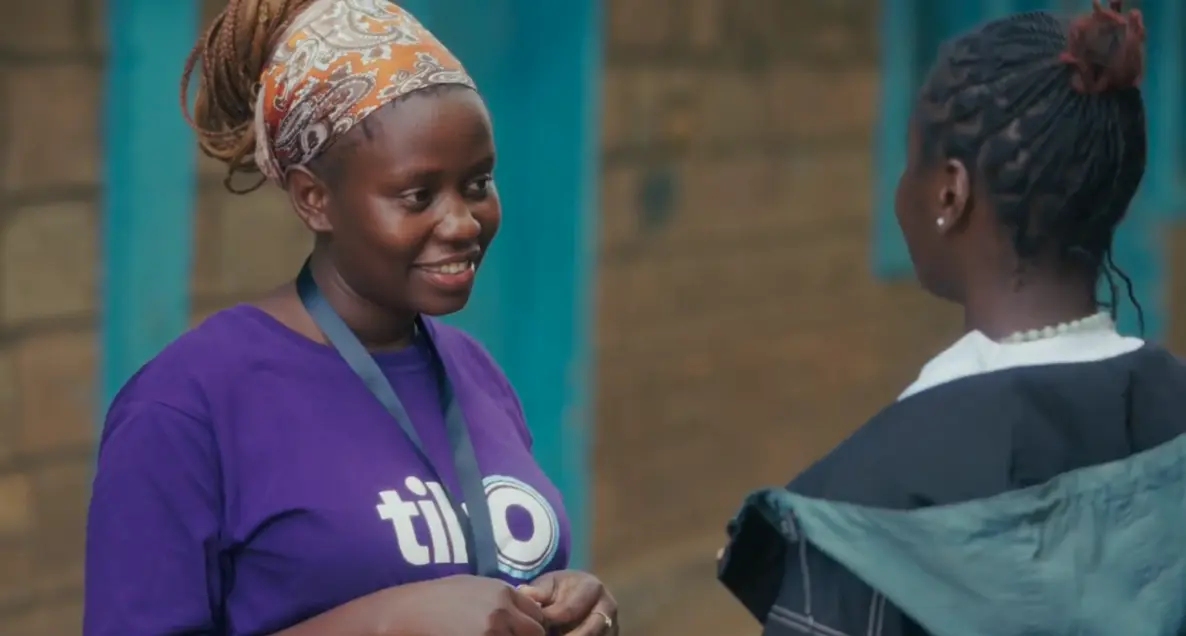
Amina meets Miriam, a Tiko mobiliser in her community
Miriam is a mobiliser working with one of Tiko’s local community-based organizations. She has been trained to identify and engage vulnerable girls like Amina. Miriam grew up in the same community as Amina and faced similar challenges. She introduces herself to Amina, asking about her safety, and listens to her experiences. Miriam explains that through the Tiko digital platform, Amina can access trauma counselling, sexual and reproductive healthcare, HIV testing and other vital services at no cost. She describes how these free services cater specifically for girls like Amina, that they are quality-assured, and the medical providers will not judge her. Amina trusts Miriam because she has been through similar challenges.


Step 3
Miriam enrols Amina onto the Tiko platform
Amina agrees to Miriam enrolling her onto the Tiko platform – her digitally-enabled ecosystem of quality public and private healthcare providers, pharmacies, community mobilisers and retailers. Amina doesn’t need a phone to access the services. Miriam can enrol her onto the system through Whatsapp, SMS or a QR code while making sure her identity and data remain private. Amina is enrolled and receives a Tiko card with a QR code specific to her. Miriam suggests she get support as soon as possible and refers her to a private health provider nearby which is able to see Amina the next day.


Step 4
Amina is referred to a local health clinic
The private clinic has partnered with Tiko to benefit from demand generation and the ability to help vulnerable adolescent girls. The clinic is funded through Tiko to provide girl-centered services and it is trained and rewarded to provide quality healthcare which patients like Amina can rate based on the quality of the service. Amina is surprised that the clinic staff listen to her and treat her with respect. At no cost, she is given a consultation on her sexual and reproductive health and advice on her pregnancy; she is tested for HIV and counselled on her options to prevent future HIV infection. The clinic also refers her to a trusted community sexual violence support service to receive trauma counselling. Amina is happy with the service she’s received and gives the clinic a good rating. The clinic registers the services she has received to trigger their subsidy payment from Tiko.


Step 5
The health clinic refers Amina for trauma counselling
Amina attends the sexual violence support service that she has been referred to through the Tiko platform. She feels safe in the environment and able to open up about her trauma for the first time. She gives the clinic a good rating for its quality, adolescent-friendly and survivor-centred approach. The service and ratings are reviewed and verified by Tiko through its platform. And each time Amina rates a service, she receives Tiko Miles rewards.


Step 6
Amina exchanges Tiko rewards for hygiene products at a local store
Miriam follows up with Amina and encourages her to join a Tiko Club to meet girls like herself for peer support. She encourages Amina to attend follow up appointments too. Amina builds up Tiko Miles which she starts to exchange for food and hygiene products such as sanitary pads and soap at a local shop which has joined the Tiko ecosystem. The retailer accepts the Tiko Miles and cashes them in for real payments direct from Tiko. The retailer not only gets a steady footfall of customers but is also happy to help motivate vulnerable girls in the community to seek positive health behaviours.


Step 7
Amina now feels in control of her future
As Amina’s confidence grows, she no longer feels unsafe, isolated and alone. She feels in control of when, where and how she meets her health and wellbeing needs and she is proud to be part of a community of girls and young women making informed decisions about their bodies and their health. For the first time, Amina feels that she can start thinking positively about her future. After her baby is born, she hopes to get support so that she can return to school and pursue her dream to become a teacher.


Our ecosystem
Our ecosystem partners are growing all the time
Across six countries in sub-Saharan Africa, in 2025 we partnered with more than 6000 mobilisers, community-based organizations, retailers and health providers.

Active mobilisers
4,262

CBOs
169

Retailers
750

Clinics
978

Pharmacies
109

