
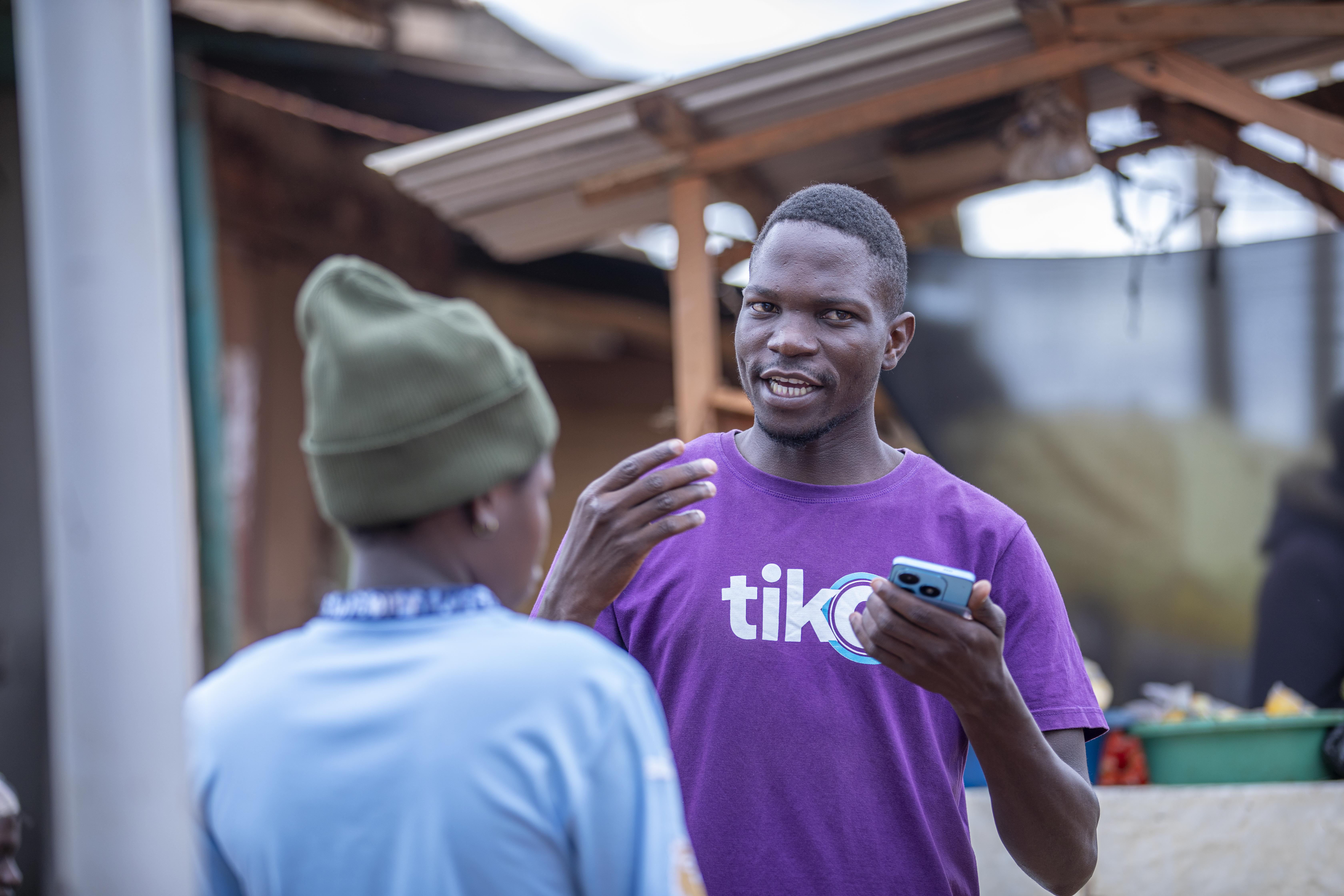
In February 2025, a Tiko mobiliser named Geoffrey was walking through the Acholi Quarters, an informal settlement in Kireka on the edge of Kampala, Uganda. He was going door-to-door to connect young women with Tiko; a programme providing vital support for reproductive health, HIV prevention, and safety from sexual violence. This is where he first met 22-year-old Justine Nanyonjo.
Justine, a teaching assistant at a local nursery school, was quick to listen when Geoffrey knocked on her door. As he spoke about free HIV testing, contraceptives, and the specialised care available for survivors of violence, she didn’t just sign up for herself, she immediately began encouraging her friends and neighbours to do the same.
“Geoffrey explained that Tiko offers free testing and counselling, and even contraception services like the pill or the injection,” Justine shares. “He also made it clear that if someone has been hurt or raped, they can find sanctuary and medical care through Tiko, while the team helps ensure there’s a proper investigation.”
Justine sees the reality of life without this safety net every day. In her neighborhood, teenage pregnancy is common because many girls have been left to fend for themselves. Without money or family support, they often find themselves trading their bodies just to get by. Justine speaks about this not to cause a stir, but because it is the honest truth of her community.
“There is no one looking out for them,” she explains. “Their parents are gone, so when men approach them with offers, they feel like they have no other way to survive.”
Taking control of her own health, Justine now goes for HIV testing every three months. She has become familiar with every step of the journey, from the initial quiet talks with counselors to the moment blood is drawn and the nervous wait for results. She even shares a small laugh when thinking about the tension of that waiting period.
“At that point you get scared, wondering why they are counseling you so much, but it’s for your own good,” Justine shares, adding that the healthcare workers make a real effort to help girls feel comfortable. “They make light jokes to cheer you up, and even after the results are revealed, you still receive counseling regardless of the outcome.”
Whenever young people like Justine access a service, Tiko rewards them with digital points called “Tiko Miles”. These miles aren’t just numbers on a screen; they can be swapped for actual goods at local partner shops.
“I still remember the first time I went to use my miles. When the shopkeeper scanned my card, I found I had 7,000 Ugandan shillings [about £2). It might not sound like much to some, but I was able to buy fresh bread for my mother and a pack of biscuits for my nephew to take to school.
“The money didn’t last long,” she admits with a gentle smile, “but seeing my nephew’s face light up with his school snacks made it all worth it.” Her mother’s reaction, however, was what stayed with her most. “To be honest, she used to think I was just wasting my time at these sessions. But when I walked in with that bread and those biscuits, it finally clicked for her. She was so incredibly proud.”
Justine had to leave school after Form 4. Life has been a quiet struggle since her father passed away back in 2006. She and her mother lean on each other, sharing their modest home while her mother also looks after her young nephew. There hasn’t been enough money to return to her studies just yet, but Justine speaks with a quiet certainty that there will be.
Bit by bit, she is putting aside what she can from her teaching assistant salary. Her heart is set on journalism, inspired by the poise and voice of Robina Ssanyu Mweruka, a local journalist she has looked up to for years. But for Justine, a career is just the beginning. She dreams of building a proper home for her mother. After that, her vision grows even wider: she wants to open orphanages and schools that offer free education, ensuring that girls in particular are never told that their schooling isn’t a priority.
It is a ten-year plan, spoken with the quiet, steady resolve of someone who isn’t just wishing for a better future, but is already building it.