
Rita* was just 19 when she found out she was pregnant. Alone, scared, and without support, she didn’t know where to turn.
“I was staying with a man because I had no other option. He sent me money for food, but he also used to beat me,” she says. “He didn’t allow me to talk to other men. He controlled everything. But when I became pregnant, he told me to leave him. He told me never to come to his house again.”
Rita had faced many challenges even before this. Her mother died giving birth to her, and she was raised in an orphanage from the age of two months. She never met her older brother and only saw her sister for the first time after 18 years. Her sister, a single mother of three, was also struggling and sometimes even asked Rita for help. With no family and no money, Rita’s first experience seeking care was discouraging. “I went to the clinic, but they asked for money. I didn’t have anything. I even thought of ending the pregnancy, but I couldn’t afford it.”
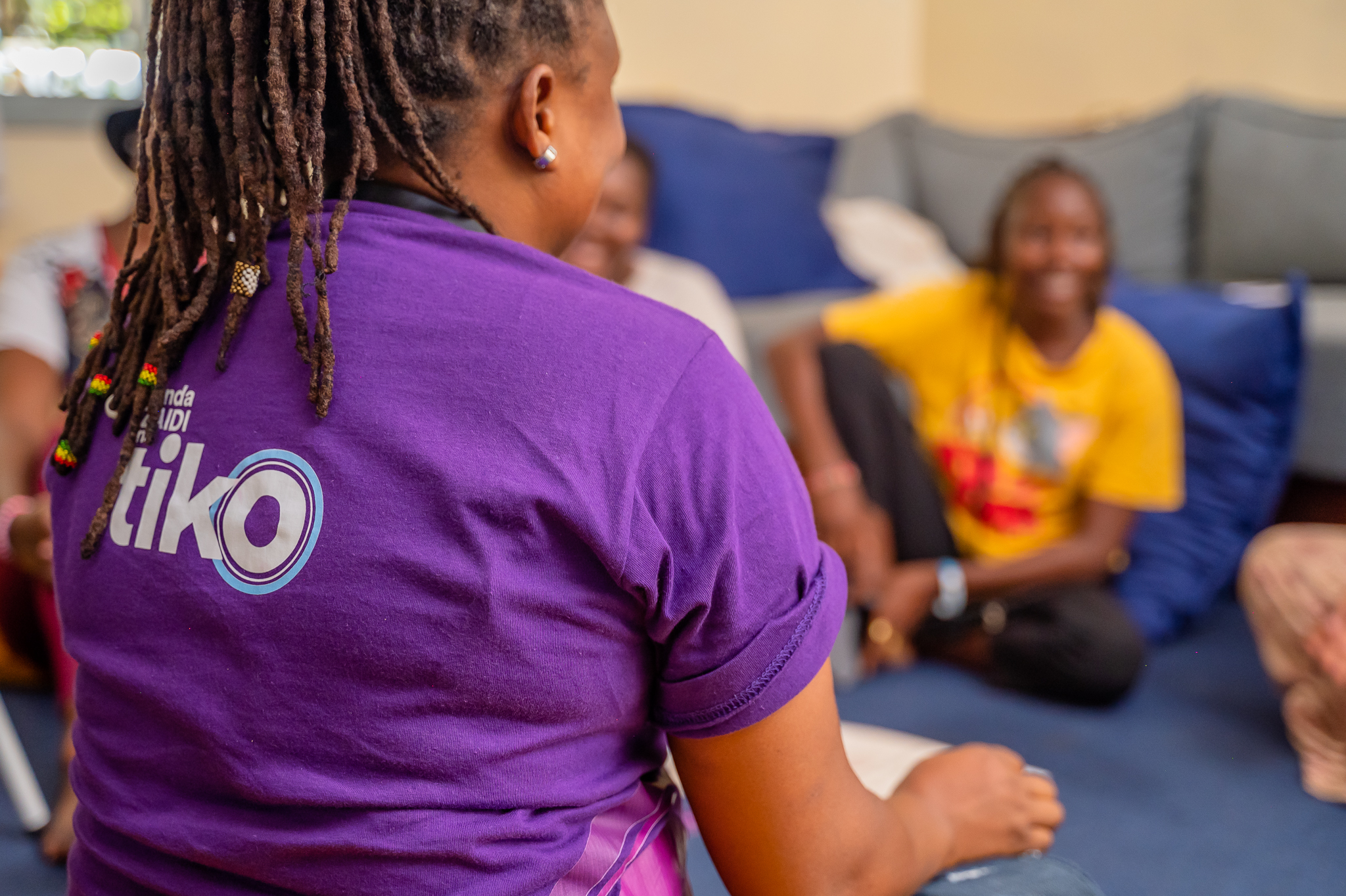
That’s when she met Bena, a Tiko mobiliser in her community in Nairobi. Bena connected her to mental health sessions, her first entry point into the Tiko ecosystem designed to offer holistic care. “We learned how to manage stress and how to think differently,” she says. “That’s where my healing started.”
Through the mental health group, Rita was supported emotionally while also being referred to other healthcare services that were important in her reality : antenatal care, HIV testing, and later, family planning and menstrual hygiene products. Because the system around her had been strengthened to meet her where she was, she no longer had to choose between survival and care.
For girls who have experienced sexual and gender-based violence (SGBV), Tiko’s goal is to ensure communities are supported to prevent SGBV and survivors have access to tailored, trauma-sensitive, survivor centred support based on their individual intersecting and evolving needs.
Rita was also connected to opportunities for livelihood training and joined a three-week Bistro service programme, later completing a three-month internship to gain work experience. “Now I’m looking for a job. I feel like I’m in a better place,” Rita says. “Tiko helped me accept myself and my baby. They gave me hope.” Her message to other young people is simple but powerful: “When you get a chance, take it seriously no matter how small it looks.”
Her journey isn’t easy, but it is made possible because the Tiko ecosystem around her is designed to catch her, carry her, and walk with her. By training community mobilisers, the reach of the health system is extended to where young people live and struggle. Rita didn’t need to navigate complex health facilities on her own; the system came to her.
However even with services available, many girls like Rita struggle with the cost of daily living. Through rating health providers, girls earn Tiko Miles, a powerful and simple rewards system that allows them to access items such as toiletries, diapers and baby food without cash. Rita’s story shows what’s possible when the health system is strengthened from the ground up. Having trained mobilisers who can spot and support vulnerable girls, by connecting them to integrated SGBV support, mental health, HIV and sexual and reproductive health services, breaks down barriers to access and ensures continuity of care that doesn’t end after childbirth. An ecosystem that gives girls the opportunity to realise the future that they dream of.
“name changed to protect identity. This story was written by Tiko with consent from Rita.