
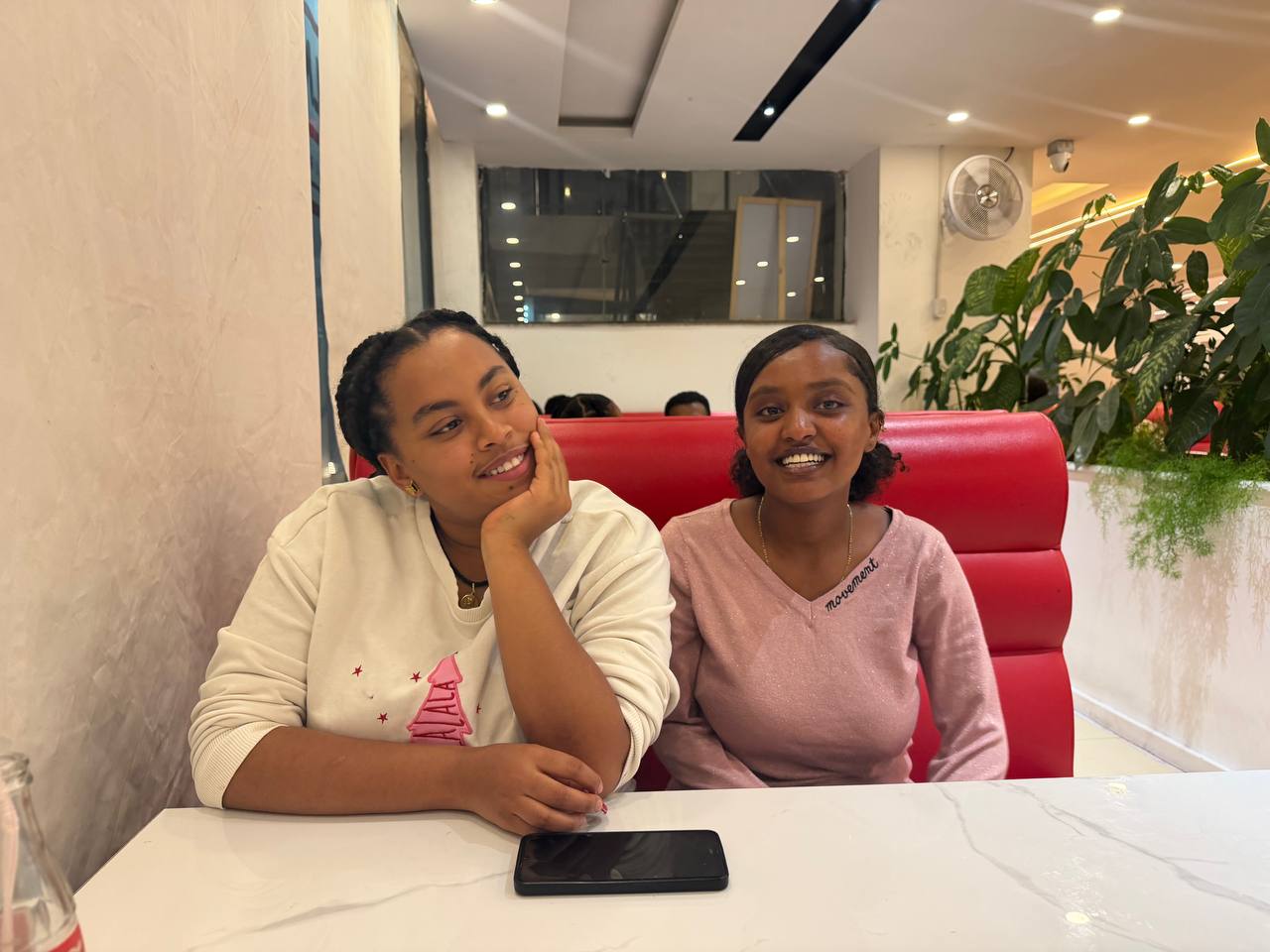
Growing up in Kirkos, Ethiopia as a young woman means walking a tightrope. The neighbourhoods are densely populated, houses stand wall-to-wall, and news spreads like wildfire.
“Growing up here is tough,” explains Abigiya Yared, a 19-year-old student. “Word travels fast about anything you do. There’s a perception among girls that having sex makes you ‘cool’ but when consequences come, it is only the girls who face them alone.”
Her close friend, 20-year-old Rediet Birhanu, knows that reality intimately.
“The community is strict, judgmental, and closed-minded,” Rediet shares. “So many girls our age are getting pregnant unintentionally or partying and overrelying on 72-hour emergency contraception pills. When we try to visit public hospitals, staff often treat us poorly.”
Without non-judgmental spaces to turn to, both girls did what many youth in their neighbourhood do: they kept their questions strictly between close friends or typed them quietly into ChatGPT.
Everything shifted when Abigiya met a Tiko mobiliser in the neighbourhood and brought Rediet along to the Tiko Club peer sessions. Right away, the dynamic felt different.
“The sessions weren’t delivered like a boring lecture; they were fun, open, and interactive. The facilitator was warm, approachable, and made everyone feel at ease with these topics,” said Abigiya.
For Rediet, an aspiring beauty and nail artist who describes herself as normally reserved, the eight club sessions cracked open a new way of being. “Being part of this close-knit group helped me break out of my shell and speak more freely,” Rediet says.
Alongside sexual and reproductive health topics, discussions on self-care, mental health, and managing daily stress gave her tools she had never been handed before.
For Abigiya, the sessions validated her deep ambitions. In a neighbourhood where few older role models remained in school, she had long relied on her own determination to see a future beyond early marriage or pregnancy.
“The sessions on goal-setting and self-care opened my eyes,” Abigiya notes. “They reassured me that it’s okay to be ambitious and that everything I want to achieve, for instance, going to university, graduating, and becoming a doctor or psychologist, are all within my reach.”
The club also broke the financial and logistical barriers that keep young women vulnerable. By redeeming Tiko Miles for essential hygiene items and menstrual pads, and accessing free healthcare services, both young women experienced a tangible sense of relief. As Rediet puts it, “Having free access to these items gives you a wonderful sense of dignity, knowing that you are seen, valued, and looked after.”
Both young women recently graduated from the club as self-assured advocates in their own right. They no longer need to rely on internet searches in the dark or guesswork among peers; they hold accurate facts and clear agency over their bodies.
When asked what lessons they would share with a younger girl navigating the streets of Kirkos, Rediet doesn’t hesitate:
“Always prioritise yourself and your choices. Remember that no one else’s opinion should ever come before your own well-being.”
Abigiya agrees:
“Be bold when it comes to your health and your body. The community will always be strict, but plan your future at your own pace, and know you have a sisterhood standing right behind you.”
About: Tiko Clubs
Tiko Clubs are inclusive, youth-led peer groups designed to promote sexual and reproductive health and rights (SRHR), HIV prevention, social and behavioural change (SBC), self-care, and sexual and gender-based violence (SGBV) awareness amongst adolescent girls and young women. Organised through local community-based organisation (CBO) partners, the clubs provide a safe, confidential, and supportive environment where participants can build trust, develop self-reliance, and make informed choices about their health and wellbeing.