
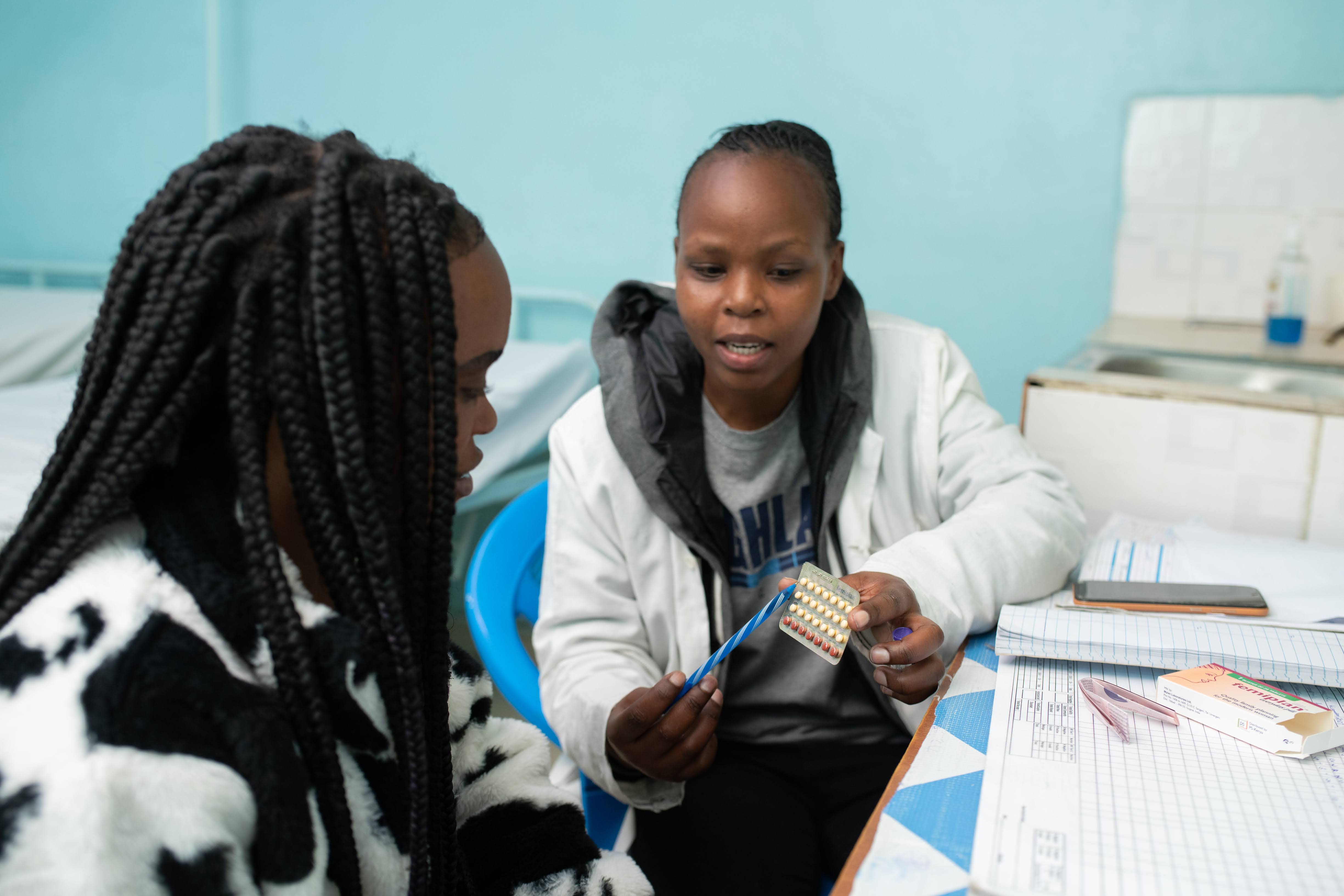
Breaking the cycle – how group antenatal care is transforming adolescent girls’ and child health in Kenya
In Kenya, statistics tell a story that needs a new chapter: 15% of adolescent girls aged 15-19 have already experienced pregnancy.
While the first pregnancy is a life-changing event, the real challenge often lies in what comes next. The first 12 months after a young mother gives birth are critical, especially preventing another pregnancy or further pregnancies spaced closely together. For many adolescent mothers, family planning after childbirth – postpartum family planning – remains out of reach. Often lacking the confidence to negotiate their own healthcare, or the autonomy to make informed choices, adolescent mothers face high unmet need for family planning.
The Tiko approach: creating supportive and safe spaces
Between June 2024 and January 2025, Tiko piloted a new innovation for our digital platform-assisted model: integrating Group Antenatal Care for adolescent girls and young women in seven sites across Machakos and Siaya counties in Kenya.
Group Antenatal Care brings 6 – 12 pregnant adolescent girls of similar gestational ages together. Through the Tiko platform and Tiko clubs, community health promoters are able to identify and refer pregnant adolescent girls who then come to a health facility or community space for group sessions and clinical examinations. Guided by trained nurses and supported by the community health promoters, these sessions transform clinical check-ups into a supportive and safe space where girls can ask questions and learn from each other’s experiences.
These peer discussions help reduce stigma and debunk common myths about contraceptives. Inviting partners, mothers, mother-in-laws or guardians to attend some of the sessions also enables close family members to learn about birth preparedness and support the young mother-to-be’s decisions.
Through the Tiko platform, we are able to accurately track uptake and follow up with the participants in order to identify and implement improvements, ensuring increased use of post-childbirth family planning services.
The power of the group: key results
The pilot didn’t just change conversations. It changed outcomes. By January 2025, the impact was clear:
- Methods of choice: Long-acting solutions were the most popular, with 40% choosing implants, followed by 30% opting for injectables. 15% chose oral pills.
- High enrolment: 513 adolescent girls joined Group Antenatal Care via Tiko, representing 40% of all pregnant women at the pilot facilities.
- A large jump in uptake: Among the 134 girls who gave birth in the pilot period, 55 girls – 41% – adopted a family planning method within their first six weeks, a 65% increase compared to the same period of the previous year in which 33 girls among 105 selected a family planning method.
Beyond the numbers: building confidence
The most significant shift wasn’t found in a spreadsheet. It was found in the girls’ confidence. By integrating family planning information into a group setting, these young women moved from being passive recipients of care to active decision-makers.
The ‘safe space’ allowed them to ask the tough questions about child spacing and health without fear of judgment. By including male partners and mothers-in-law in the process, the programme didn’t just support the girl, it educated her entire support system.
The bottom line
The Group Antenatal Care model proves that when you provide adolescent girls with information, peer support and a supportive environment, they take charge of their futures. It’s a promising blueprint for improving maternal and child health outcomes across Kenya.
This Insights article is based on the Tiko research abstract: Targeted Group Antenatal Care as a pathway to Postpartum Family Planning uptake among adolescent girls in Machakos and Siaya counties, Kenya – authored by Alice Odhiambo, Beatrice Wango and Joan Gichuki, and accepted for presentation at the 3rd African Workshop on Women & HIV March 2026.
For more information contact: hellokenya@tiko.org