
Keeping the promise to Africa’s girls: Why we must end fragmented care to tackle HIV
CAPE TOWN, SOUTH AFRICA — The newly released UNAIDS Special Report shows that global progress against HIV has achieved historic milestones, but for adolescent girls and young women (AGYW) in sub-Saharan Africa, the picture is still deeply concerning.
UNAIDS data reveals that sub-Saharan Africa remains the epicentre of inequality: 3,000 adolescent girls and young women acquire HIV weekly. In this region, girls and young women aged 15–24 are three to four times more likely to acquire HIV than their male peers, and women account for six out of every ten new infections.
This systemic crisis is being exacerbated by a staggering 18% drop in international HIV funding, the largest funding decline in nearly two decades, causing critical health delivery sites to close, oral pre-exposure prophylaxis (PrEP) uptake to plunge by up to 50%, and local Sexual and Gender-Based Violence (SGBV) support services to drop by up to 72%. These impacts require an immediate, fundamental transformation in how healthcare is delivered to girls across Africa.
“We must stop treating girls’ lives as a series of disconnected medical concerns,” says Serah Malaba, Tiko Co-CEO. “A girl doesn’t face HIV risk one day and sexual violence or unintended pregnancy the next. These vulnerabilities are deeply intertwined, and her care must be too. No prevention option is effective if a girl cannot trust, choose or reach it. Real health equity means moving beyond celebrating a single breakthrough medical innovation to building a permanent, resilient health system that integrates prevention, contraception, and support for sexual violence survivors into an integrated, dignified pathway designed for her.”
The UNAIDS report highlights an extraordinary wave of prevention innovations—such as twice-yearly injectable PrEP (Lenacapavir). However, Tiko stresses that scientific innovation will fail to end the epidemic without equal investment in local delivery architecture.
Aligning with the 2026 UN Political Declaration on HIV/AIDS, which mandates that 80% of prevention and 60% of societal enabler programmes be led by grassroots networks, Tiko directly supports trusted community based organisations, works within government established community health strategies enabling peer providers and community health workers who identify, inform, refer and follow up on girls ensuring they do not slip through system gaps.
Girls in sub-Saharan Africa navigate a severe, interconnected “Triple Threat”: unintended pregnancy, HIV acquisition, and sexual violence. Forcing a young woman to navigate separate clinics, bureaucratic hurdles, and persistent stigma for contraception, testing, and trauma support creates insurmountable barriers to life-saving care.
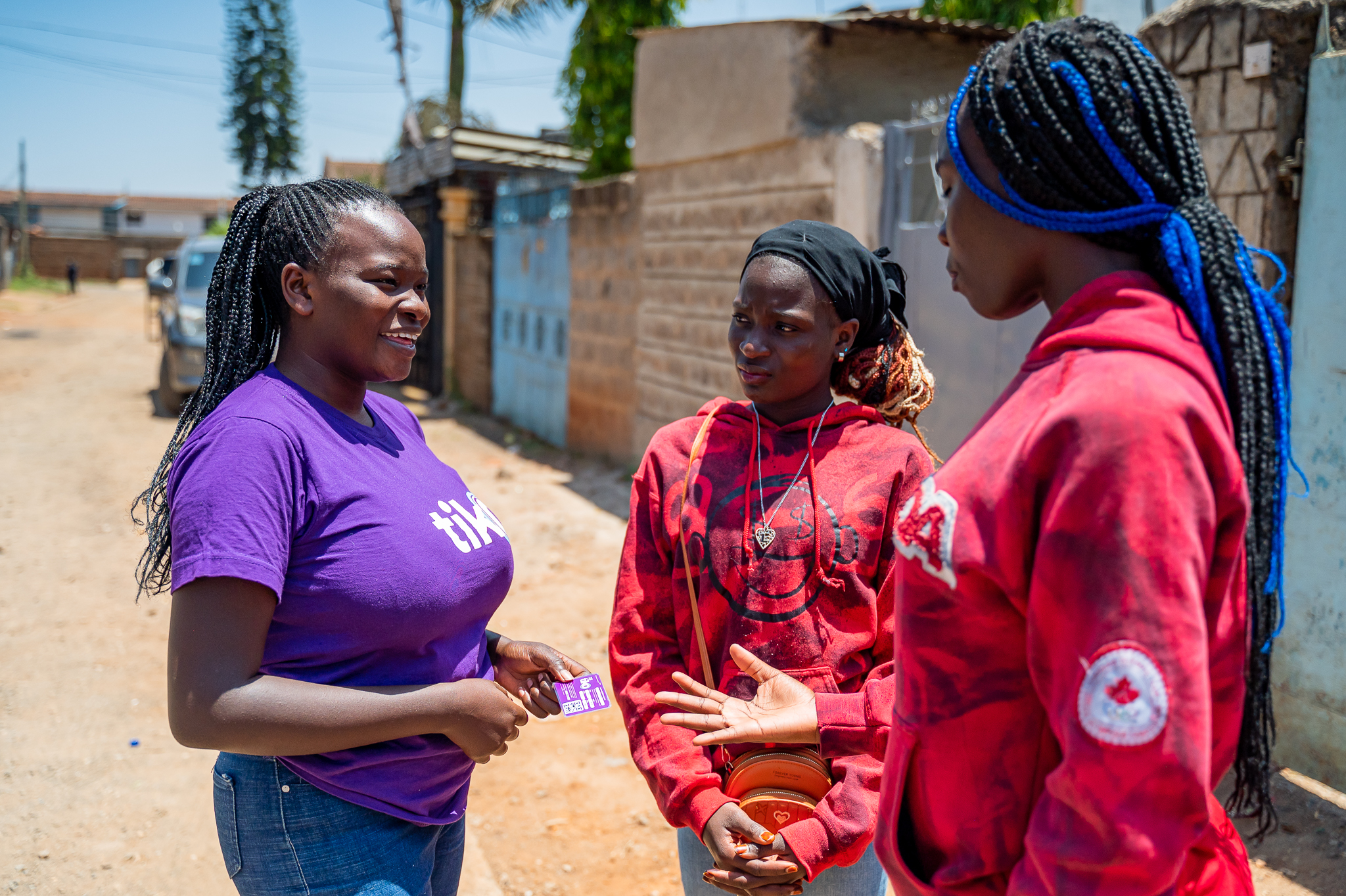
By removing these barriers, Tiko connects over 1 million girls annually to free healthcare across six sub-Saharan African countries—Kenya, Uganda, Ethiopia, Nigeria, South Africa, and Burkina Faso—with a goal to scale this model to 3.5 million girls per year by 2030.
In response to the UNAIDS Special Report, Tiko calls on global leaders, donor governments, international institutions, and national ministries to take three immediate actions:
- Fund Integrated ‘Triple-Threat’ Pathways: End siloed funding and delivery. Direct capital into integrated health models that concurrently provide sexual and reproductive health (SRH), HIV prevention, and SGBV response under seamless pathways.
- Make choice possible for girls: Prioritise vulnerable girls for immediate, decentralised, and free access to the available next generation HIV prevention options.
- Increase Funding that Supports Local CBOs: Ensure funding sustains grassroots, community-based organisations directly as recognised, essential interconnectors; prevention will work best if grassroots organisations are part of the delivery ecosystem.
About Tiko
Tiko is an African non-profit partnering with governments, healthcare providers, and community organisations to reimagine health systems for adolescent girls across sub-Saharan Africa. We transform fragmented services into an integrated, accessible ecosystem for girls facing the risks of unintended pregnancy, HIV, and sexual violence—prioritising their lives and choices. By addressing this urgent crisis, we are building a future where every girl has the protection and power to determine her own path.