
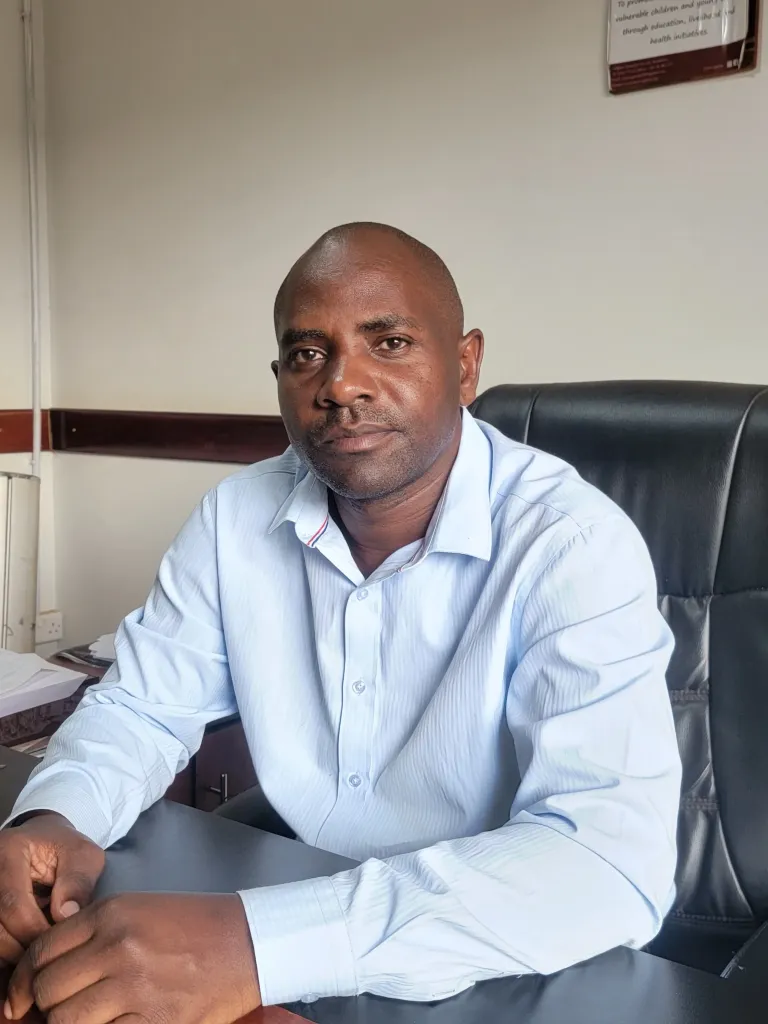
In Bwaise, one of Kampala’s largest informal settlements, life is not easy for young people. Poverty, overcrowding, stigma, and limited access to basic services shape everyday reality. For many girls and young women, these challenges are even heavier especially when it comes to sexual and reproductive health, safety, and mental wellbeing.
For Geofrey Nsubuga, one of the founders of SOMERO Development Initiative, this reality is deeply personal.
A journey rooted in the community
Geofrey was born and raised in Bwaise. Growing up, he saw first-hand how adolescents were exposed to sexual exploitation, child labour, and violence. Many young people had no safe spaces, no trusted adults to turn to, and very limited access to health or psychosocial support.
Before setting up SOMERO, Geofrey volunteered with a group of friends from Uganda and Germany, supporting vulnerable and sexually exploited young people in the slums. During this work, they met a young girl who had faced repeated exploitation. While they tried to support her through literacy and education, the stigma, trauma, and reproductive health challenges she carried became overwhelming. Tragically, she attempted to take her own life.
That moment changed everything.
Shortly after, another heartbreaking incident shook the community. A 17-year-old girl involved in commercial sex work, a severe form of child labour contracted HIV. The stigma from her community and the emotional burden she carried became too much, and she took her own life.
“These were not isolated cases,” Geofrey explains. “They showed us how broken the system was for young people.”
Out of this pain, SOMERO Development Initiative was born, created by young people from the community, for the community. Its goal was clear: to protect adolescents, support girls and young women, and respond to the many challenges they face, not just one at a time, but together.
The challenges before integration
Before working with Tiko, young people in Bwaise faced many connected problems at once. Poverty, unemployment, school dropouts, unsafe housing, violence, substance abuse, and poor sanitation were common. Girls and young women were especially vulnerable to unintended pregnancy, HIV, sexual violence, and stigma.
Accessing help was hard.
Health facilities were often far, overcrowded, or unfriendly to young people. Many feared being judged or exposed. Reliable sexual and reproductive health information was limited, so myths and misinformation spread easily. Psychosocial support, legal services, and child protection systems were weak or difficult to navigate.
SOMERO worked hard to fill these gaps. The team organised community outreach sessions, health camps, mentorship programmes, and referrals to government and private health facilities. They supported education retention and linked families to livelihood opportunities.
But there were limits.
Follow-up was difficult. Tracking referrals was mostly manual. Young people who needed private, real-time support often had nowhere to turn. Stigma kept many silent. SOMERO knew they were reaching some but not enough.
Discovering Tiko
SOMERO first learned about Tiko through work with the Aga Khan Foundation under the In Their Hands project, which aimed to reduce teenage pregnancies in Kampala. The project introduced Tiko as a digital platform offering confidential, youth-friendly sexual and reproductive health services.
For SOMERO, Tiko felt like the missing piece.
“Tiko addressed the gaps we were struggling with,” Geofrey says. “Privacy, follow-up, and reaching young people who could not always come to us.”
The platform allowed peer mobilisers to connect young people to trusted health facilities, provide accurate information, and ensure follow-up, all while protecting confidentiality. Importantly, Tiko also engaged parents and caregivers, helping reduce fear and resistance around adolescents accessing SRHR services.
What changed with integration
With Tiko, SOMERO’s work became more connected and more effective.
Peer mobilisers were digitally linked to the platform, making it easier to register young people, follow up on referrals, and respond quickly to needs. Government and private health facilities became part of one coordinated system. Young people could access multiple services like SRHR counselling, HIV testing, mental health screening, and referrals without moving from place to place.
Day-to-day work improved. Follow-up became stronger. Data helped the team plan better outreach. Services became more client-centred, not fragmented.
Most importantly, the experience for young people changed.
They could ask questions without fear. They felt listened to. They knew someone would follow up.
Shakira’s story: integration in action
Shakira *(not her real name) was 19 years old when her life took a painful turn. Living with her aunt in Bwaise, she experienced sexual violence by a trusted family member. When she spoke up, she was dismissed. Reporting the case was discouraged.
Later, when she fell sick, a health facility treated her for malaria but no one addressed the trauma she carried inside.
At school, stigma followed her. She felt isolated and judged. Eventually, she dropped out.
Shakira was later identified by a Tiko peer mobiliser from her community, someone she trusted. Through Tiko, she was enrolled using a simple card and linked to a youth-friendly, integrated health facility.
In one place, Shakira received sexual and reproductive health counselling, chose a contraceptive method, tested for HIV, and was enrolled on PrEP. She was also screened for mental health needs and linked to psychosocial support.
For the first time, her needs were addressed together.
With continued follow-up through Tiko, Shakira later returned to live with her mother in a safer environment. She accessed another HIV test near her village and is now being linked to skills training to help her build a more stable future.
Since partnering with Tiko, SOMERO has seen real change.
Young people access services faster and more confidently. Referrals are smoother. Follow-up is consistent. Trust in health services has grown. Parents are more supportive. Adolescents who come for one service often receive several others, maximising every contact.
Between June and December 2025 alone, 16,332 young people were enrolled and referred, and 44,639 accessed services.
This is the power of integration.
Why integration matters
Young people do not experience problems in isolation. Health, safety, mental wellbeing, and economic pressures are deeply connected. When services work together, young people are supported as whole people, not just cases.
Integration builds trust. It reduces gaps. It ensures no one falls through the cracks.
As Geofrey puts it:
“For the first time, young people in informal settlements can ask for help without fear, reach the right services faster, and know that someone will follow up and walk the journey with them.”
Looking ahead
SOMERO hopes to see Tiko grow beyond health, linking young people to education, skills training, livelihood opportunities, and stronger support for survivors of sexual and gender-based violence.
Because when systems come together, lives change.
And in communities like Bwaise, that change is long overdue.