
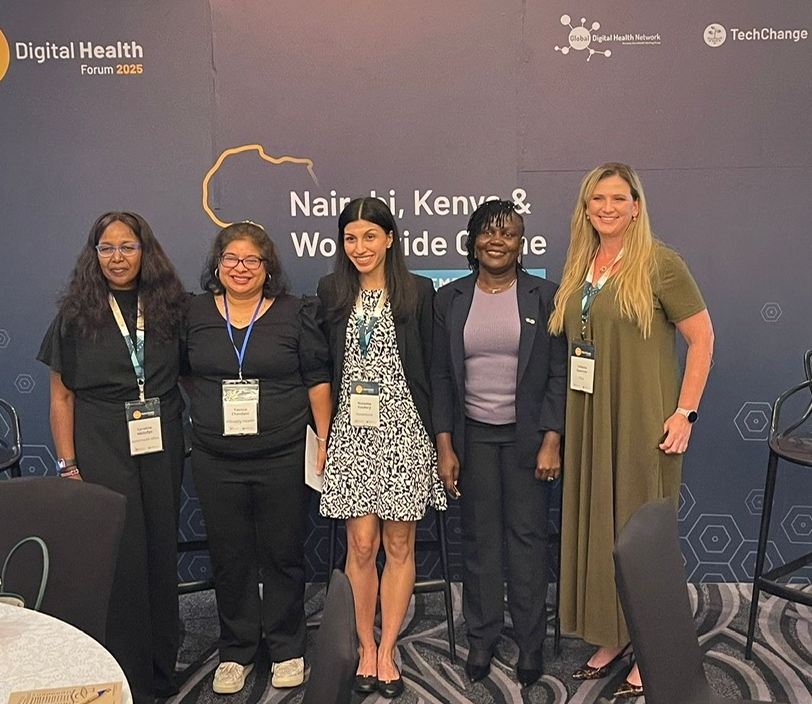
Tiko was delighted to host an all-women panel for our event From Promise to Dignity: Powering Human-Centred Care with AI at the 2025 Global Digital Health Forum (GDHF) held between 3-5 December in Nairobi.
In a lively and insightful exchange, panellists explored how ethical AI and resilient community-focused initiatives are powering transformation in public health across Africa, especially in the area of adolescent girl-centric care. Debating how data and AI can turn into dignity for millions, they shared their experiences of ethical models that are driving smarter systems, more inclusive care, and real impact at scale.
The event was moderated by Tiko’s Celeste Sparrow, Deputy Chief Product Officer.
Panellists included:
- Serah Malaba, Co-CEO, Tiko
- Natasha Sunderji, Global Health and Nutrition Lead, Accenture
- Caroline Mbindyo, Chief Innovation Officer, Amref Africa
- Yasmin Chandani, CEO, inSupply Health

What did we learn from the discussion?
Here are the panellists’ top ten takeaways.
- People before technology. The most effective AI health innovations begin with people and communities, not machines. AI succeeds when it supports – not substitutes-human relationships. AI is a means to an end, not the end itself.
- Integration drives impact. Successful, scalable AI solutions are those that integrate seamlessly into existing health systems and workflows, and are co-owned by governments, health workers, and communities.
- Trust is non‑negotiable. Ethical design, transparency, and strong data protection build lasting trust between users, implementers, and institutions.
- AI doesn’t close equity gaps – people do. Digital tools reflect the biases of their context; it’s human intent and design that determine whether AI reduces or widens inequalities.
- Design with, not for, vulnerable groups. Initiatives must address the layered disadvantages of adolescent girls and other marginalised groups by explicitly designing with them, not just for them. Without this, digital interventions don’t matter.
- Consent must be dynamic. Data belongs to the users. True consent means users can understand, shape, and retract their choices – not just tick a box at the start. We must remain mindful of the incentives that drive user behaviours and choices.
- Context is king. Co‑creation of AI tools with users, rooted in local realities, ensures AI tools remain equitable, relevant, and responsible across diverse communities. No one size fits all.
- Pause, reflect, pivot. Ethical implementers build in moments to reassess whether technologies are delivering meaningful benefits – and to adjust the course when needed.
- Operational AI can unlock system bottlenecks. Tools for tasks like supply planning or scheduling can increase efficiency and accuracy, saving or freeing up budgets. This can also free up more time for health workers to focus on higher‑value care.
- Measure what matters. Beyond technical and efficiency wins, impact should be assessed by whether AI solutions amplify human dignity – creating time, trust, and value for those delivering and receiving care.
The true revolution in African health is about driving equitable impact by deploying AI to put care where it’s needed most: in our communities. Success demands that people close equity gaps, not technology, which means prioritising design with vulnerable groups like adolescent girls. We must hold fast to non-negotiable trust, ensuring ethical platforms and dynamic consent where data belongs to the user. Our focus must shift from simply adopting tools to ensuring they seamlessly support health workers, leading to real-world transformation. Ultimately, human-centred care must embed accountability and lived experience at every single level of deployment.